
中文
中文
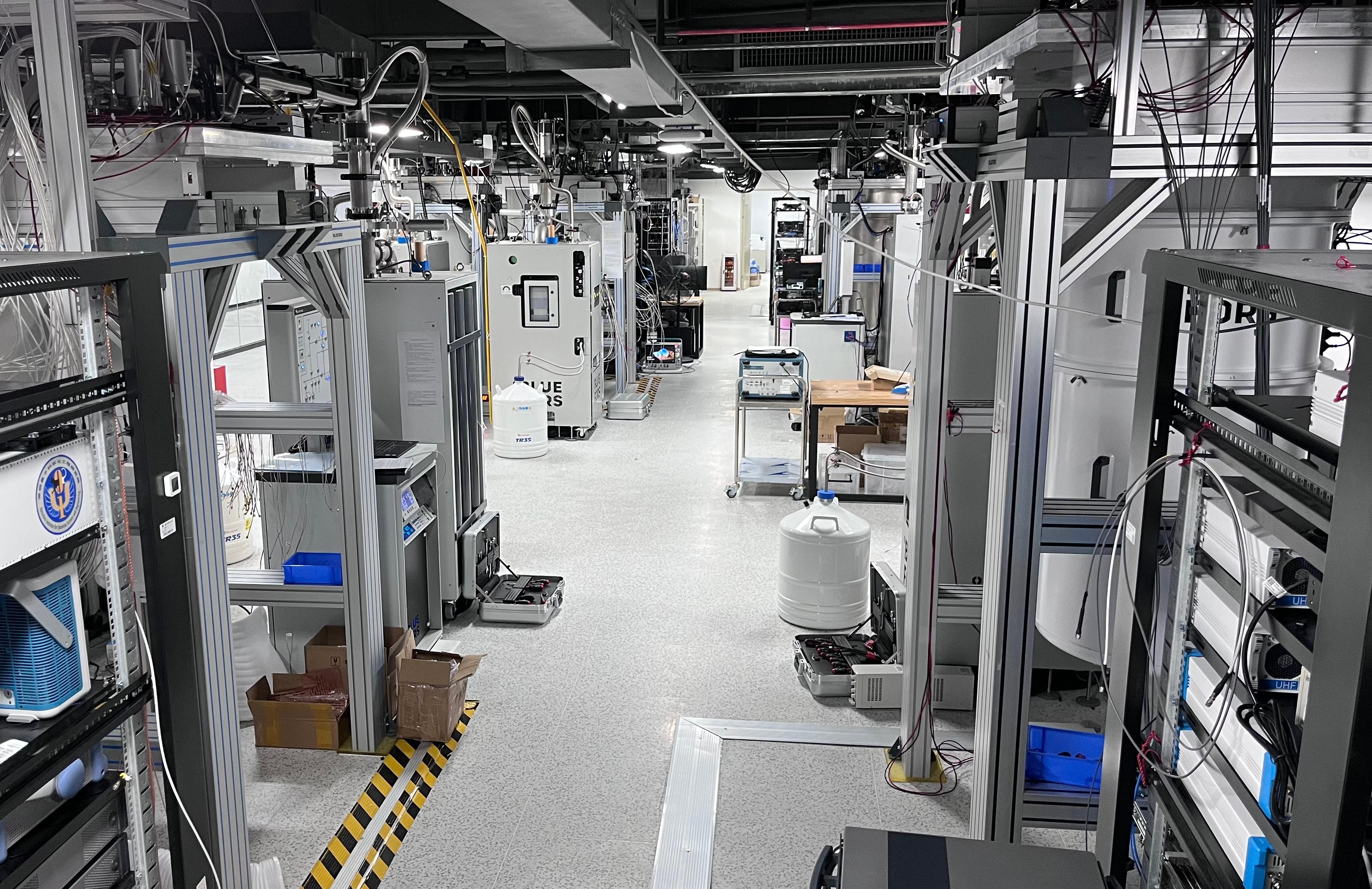
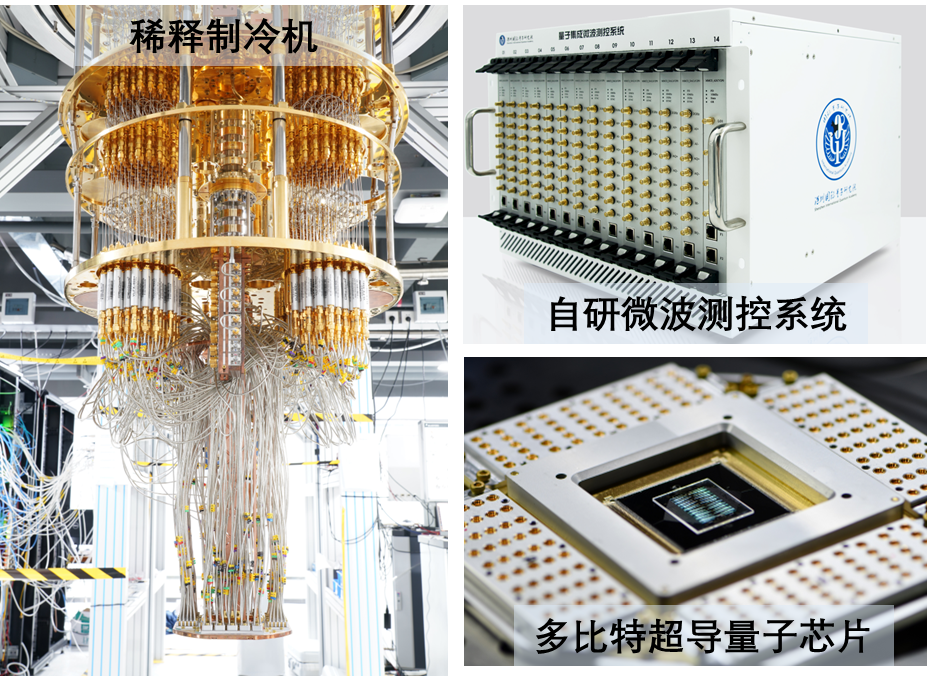
The Superconducting Quantum Computing Laboratory focuses on the development of superconducting-qubit-based quantum computing platforms, with an emphasis on scalable qubit architectures and prototype superconducting quantum processors. The laboratory has established a comprehensive experimental infrastructure whose key performance metrics are benchmarked at an internationally competitive level. The laboratory has built a cryogenic measurement laboratory of approximately 400 square meters, possessing a complete sample preparation and measurement platform, including a full micro-nano fabrication platform and more than a dozen large-scale Bluefors dilution refrigerator systems. This infrastructure ensures high-throughput device fabrication and sufficient cryogenic measurement capacity. In parallel, the laboratory has independently developed a high-precision microwave control and measurement system capable of supporting highly integrated superconducting quantum processors at the scale of more than 100 qubits.
Representative scientific achievements include:
1. Quantum error correction: the first demonstration of a 16% break-even point for quantum error correction based on discrete-variable bosonic encoding (Nature 2023), selected among the Top 10 Scientific Advances in China (2023).
2. Distributed quantum computing: the realization of ultra-low-loss quantum interconnects achieving 99% inter-chip quantum state transfer fidelity (Nature Electronics 2023), recognized as one of the Top 10 Chip Science Advances in China (2023); demonstration of long-distance (64 m) qubit interconnects and remote quantum state and gate teleportation; and a three-chip modular architecture demonstrating distributed quantum sensing advantages in multi-parameter precision measurements (Nature Communications 2026).
3. Quantum algorithms: the demonstration of large-scale reversible quantum logic, including an 8-qubit Toffoli gate and a 6-qubit Grover search implementation (Nature Physics 2023).
4. Large-scale superconducting processors: high-fidelity control of a 66-qubit superconducting processor and advances in multi-qubit quantum error correction (Physical Review Letters 2024, 2025).
5. Quantum state characterization: methods to mitigate the exponential scaling of quantum state tomography, reducing the measurement cost for large-scale quantum states (e.g., 12-qubit systems) by several orders of magnitude (Physical Review Letters 2024), and high-fidelity reconstruction and verification of multipartite entangled states up to 17 qubits on superconducting platforms (Nature Communications 2025; Physical Review Letters 2025).