
中文
中文
Recently, the research group led by Associate Researcher Jilei Chen at the Shenzhen International Quantum Academy, in collaboration with partners, has achieved significant progress in the study of coherent antiferromagnetic spin waves. Under low-temperature conditions, the team successfully observed gapless magnons in the easy-axis antiferromagnetic material α-Fe₂O₃, and achieved efficient detection of these magnons using an all-electrical spin-wave spectroscopy technique. The related results were published on February 6, 2025, in Physical Review Letters under the title “Observation of Coherent Gapless Magnons in an Antiferromagnet.”
Spin waves are collective precession modes of electron spins in magnetic materials, and their quantum excitations are known as magnons. Compared with conventional ferromagnetic magnons, antiferromagnetic magnons are considered promising information carriers for future magnonic circuits due to their high propagation velocity and strong immunity to external perturbations. However, magnons in antiferromagnetic materials usually possess a relatively large energy gap, which limits their application in microwave-based technologies. In this work, gapless magnons in α-Fe₂O₃ were observed for the first time under low-temperature conditions. These magnons were detected at frequencies close to zero and were found to propagate along antiferromagnetic domain walls, opening up new possibilities for spintronic devices based on antiferromagnetic textures.
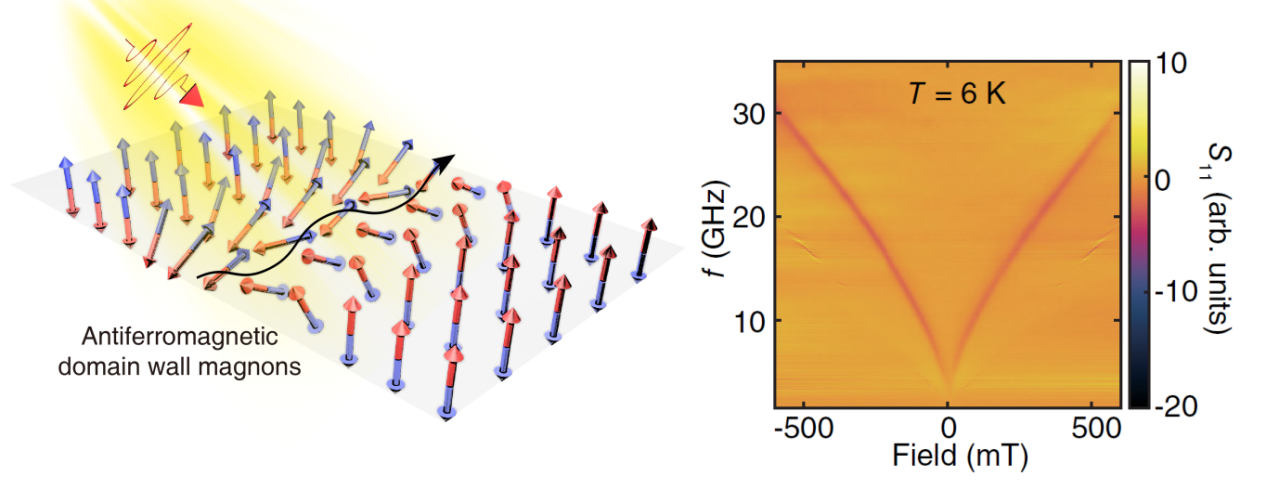
Figure 1. Propagation of gapless magnons along an antiferromagnetic domain wall.
In this study, the research team fabricated nanoscale microwave antennas on the antiferromagnetic insulator α-Fe₂O₃ and employed an all-electrical approach to precisely characterize antiferromagnetic magnon resonances at low temperatures. Through theoretical modeling and numerical simulations, the propagation mechanism of gapless magnons along antiferromagnetic domain walls was revealed. The experimental results show that these magnons exhibit a high degree of coherence and can achieve strong coupling with microwave photons. In addition, the team demonstrated the long-range propagation of gapless magnons along antiferromagnetic domain walls, providing new insights for the design of high-density spin-wave circuits based on antiferromagnetic textures. This discovery not only validates the application potential of antiferromagnetic magnons in the microwave frequency range, but also lays a theoretical foundation for the development of efficient, low-power spin-wave devices, with promising implications for future low-power, high-speed spintronic technologies. The team plans to further explore the behavior of gapless magnons in other antiferromagnetic materials and to optimize their coupling efficiency with microwave photons, thereby advancing their applications in quantum information processing and spintronics.
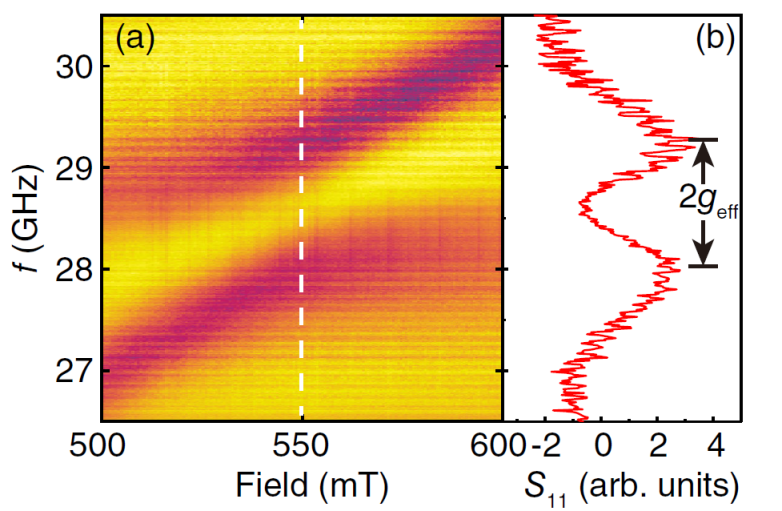
Figure 2. Strong coupling modes between gapless antiferromagnetic magnons and photons.
The first authors of this work are Jilei Chen and Dr. Zheyunjunyu Jin from the University of Electronic Science and Technology of China. The corresponding authors are Jilei Chen, Professor Peng Yan (University of Electronic Science and Technology of China), and Professor Haiming Yu (Beihang University). This work was strongly supported by the National Key R&D Program of China, the National Natural Science Foundation of China, and the Department of Science and Technology of Guangdong Province, among others.
Link to the original paper:https://journals.aps.org/prl/abstract/10.1103/PhysRevLett.134.056701