
中文
中文
Recently, the research team led by Associate Researcher Zhengda Li from the Shenzhen International Quantum Academy (IQASZ), in collaboration with partners, has achieved significant progress in distributed quantum precision measurement based on optical quantum networks. The team successfully conducted a photonic experiment employing an efficient adaptive Bayesian method to estimate a linear function of four spatially distributed unknown phases. Experimental results demonstrate that this method, using a limited number of measurement rounds, can achieve high sensitivities surpassing the Standard Quantum Limit (SQL) for arbitrary valid true phase values within the parameter space. The related research findings were published in the journal Optica of The Optical Society (OSA) on October 15, 2024, under the title "Experimental adaptive Bayesian estimation for a linear function of distributed phases in photonic quantum networks."
Quantum precision measurement methods, grounded in quantum physics, enable measurement precision that can surpass the SQL. This capability holds vast application potential across numerous scientific fields, including quantum LiDAR, atomic clocks, gravitational wave detection, and biological measurements. With the advancement of quantum networks, Distributed Quantum Metrology (DQM) emerges as a natural extension of quantum metrology. It is rapidly becoming one of the most promising applications within current quantum networks, showing great potential in areas such as magnetic field detection, quantum imaging, and global clock synchronization.
In recent years, numerous theoretical and experimental studies have been dedicated to achieving high-precision distributed quantum metrology, successfully demonstrating precision beyond the Shot-Noise Limit (SNL) within specific portions of the parameter space. However, in practical applications, the parameters to be estimated are often completely unknown. Therefore, a critical challenge is how to achieve high precision independently of the parameter values in DQM. Overcoming this is essential for fully harnessing the quantum advantage in real-world scenarios.
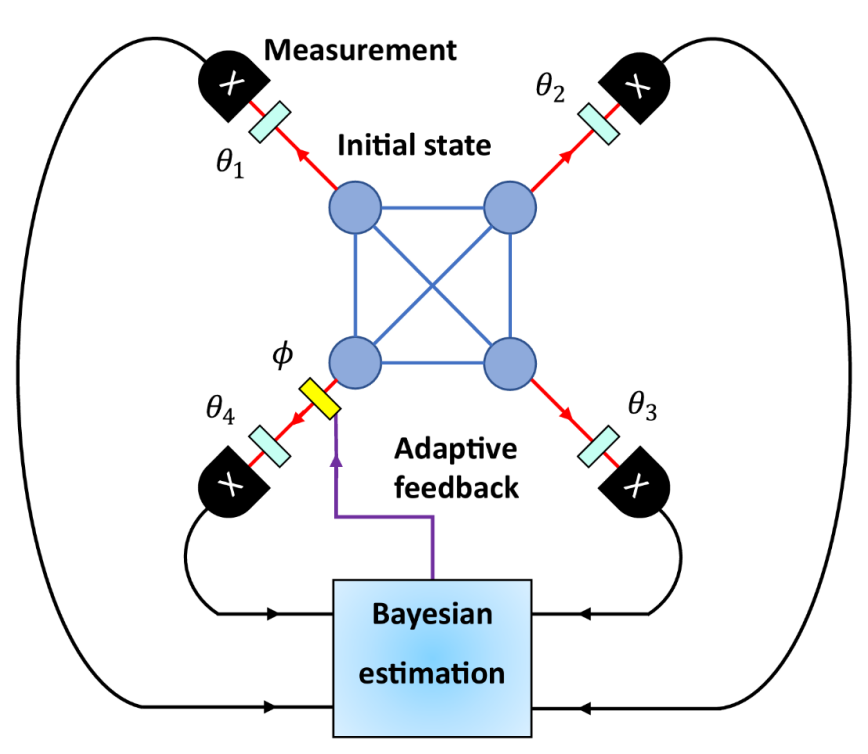
Figure 1: Four-Photon Phase Estimation Based on Adaptive Bayesian Estimation
To address this challenge, the research team proposed a solution based on adaptive Bayesian estimation for distributed quantum phase estimation in a photonic quantum network. This method aims to achieve optimal precision across arbitrary parameter values. In this work, the research team successfully estimated a linear function of four unknown phases distributed across different spatial locations within an entanglement-distribution quantum network experiment. Crucially, they achieved measurement precision surpassing the SQL under post-selection conditions. This groundbreaking work establishes the experimental foundation for Distributed Adaptive Bayesian Quantum Estimation (ADBQE) and demonstrates promising potential for application in more complex distributed quantum precision measurement tasks, thereby significantly advancing the development of quantum-enhanced distributed sensing.
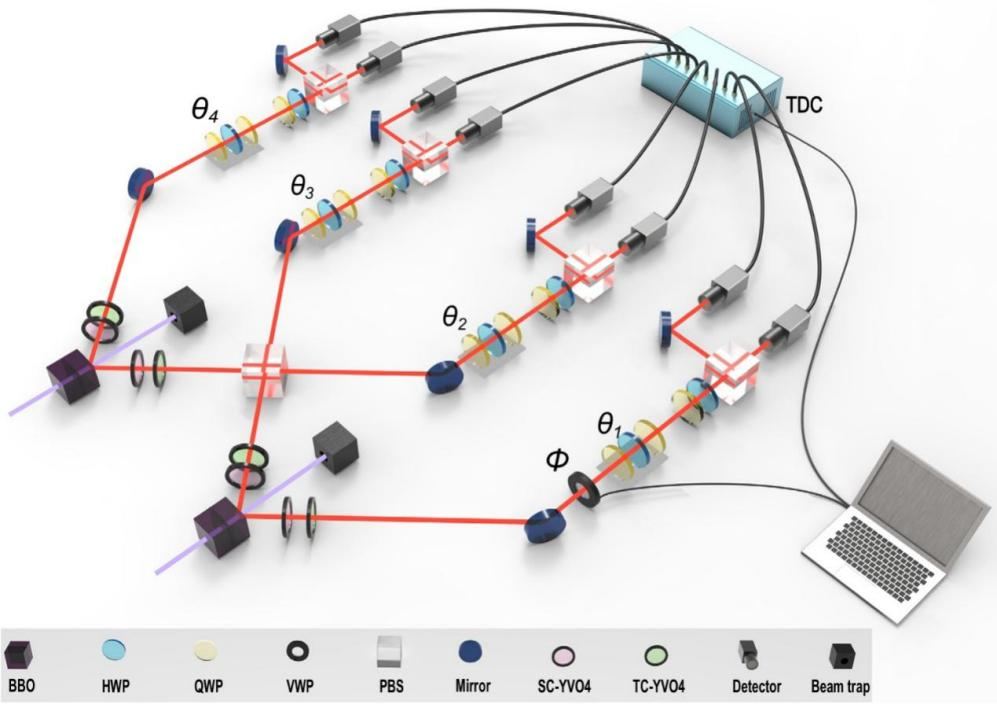
Figure 2: Schematic Diagram of the Experimental Setup
The co-first authors are Biyao Liu, a graduate student at SIQSE, and Kui-Xing Yang, Assistant Professor at the College of Engineering Physics, Shenzhen Technology University. The corresponding authors are Associate Researcher Zhengda Li (IQASZ), Professor Jingyun Fan (Department of Physics and SIQSE, Southern University of Science and Technology), and Research Assistant Professor Yali Mao (Department of Physics, Southern University of Science and Technology). This research received substantial support from the National Natural Science Foundation of China, the Guangdong Provincial Department of Science and Technology, and the Shenzhen Science and Technology Program.
Paper Link: https://doi.org/10.1364/OPTICA.532865