
中文
中文
Recently, the research team led by Associate Researcher Zheng-Da Li from the Shenzhen International Quantum Academy (IQASZ) , in collaboration with partners, has made significant progress in experimental multiparty quantum communication based on optical quantum networks. The team has experimentally demonstrated Measurement-Device-Independent Quantum Conference Key Agreement (MDI-QCKA). In this experiment, the researchers achieved a high-visibility three-photon interference among independent laser sources, enabling the distribution of secure multiparty quantum secret keys with a high rate while closing security loopholes at the detection side. This work lays a foundation for future secure long-distance multiparty quantum communication in multi-node quantum networks. The findings were published online in the international academic journal Physical Review Letters on November 20, 2024, under the title "Experimental Measurement-Device-Independent Quantum Conference Key Agreement."
Quantum key distribution (QKD) is a core technology within quantum communication networks, allowing two parties to share an unbreakable key based on the principles of quantum mechanics, thereby ensuring communication security through fundamental physical laws. Simultaneously, quantum communication networks can accomplish multiparty quantum tasks, including Quantum Conference Key Agreement (QCKA) and multiparty quantum secret sharing. With the continuous advancement of quantum information science, developing these more complex quantum tasks is essential for building future large-scale quantum communication networks.
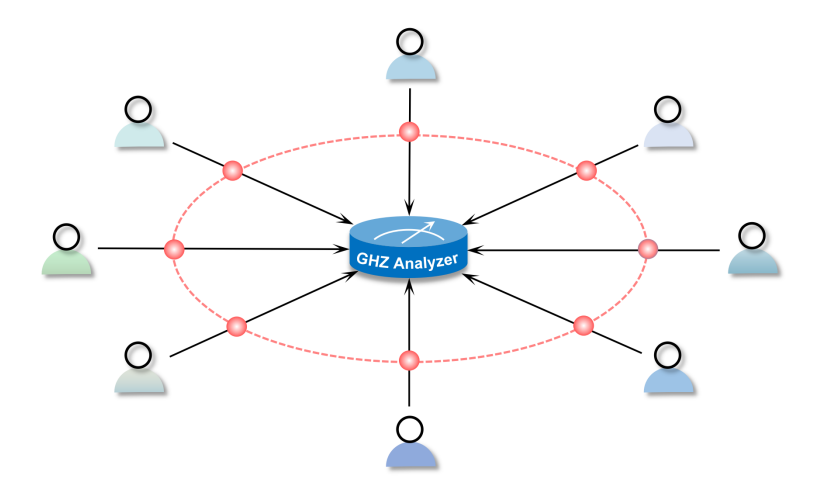
Figure 1: Experimental Scheme for Measurement-Device-Independent Quantum Conference Key Agreement (MDI-QCKA)
As a multiparty extension of QKD, QCKA aims to distribute and share an identical key among all participating parties, enabling encrypted communication within the group. The advantage of the MDI-QCKA protocol lies in its ability to distribute conference keys among multiple users while eliminating detector-side-channel loopholes present in conventional quantum communication, significantly enhancing the security of conference communications. Moreover, since each node uses weak coherent light sources instead of entangled photon sources and the number of participating nodes is more flexible, MDI-QCKA offers structural and cost benefits for future quantum network deployment.
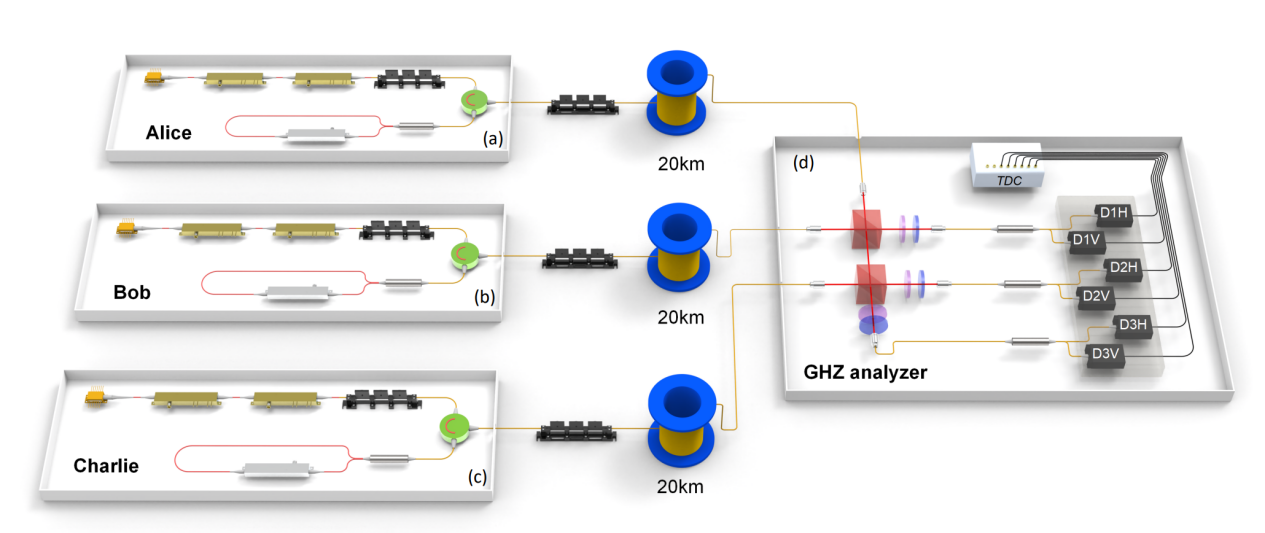
Figure 2: Schematic Diagram of the Experimental Setup
During the experiment, the team employed independent laser sources at three user nodes (Alice, Bob, and Charlie) to generate phase-randomized pulse trains, incorporating the decoy-state method to counter potential attacks on the sources. The experiment utilized a polarization encoding scheme, where quantum states were encoded and transmitted through a total of 60 km of optical fiber to an untrusted relay node, where a three-photon joint measurement (GHZ-state analysis) was performed. Ultimately, the team successfully conducted the MDI-QCKA experiment, achieving an asymptotic secret key rate of 45.5 bits/s under infinite-key-length conditions.
This achievement represents a significant step toward realizing secure multiparty communication in quantum networks, demonstrating the potential for practical application. In the future, the research team plans to further optimize the multiparty quantum communication protocol and experimental system parameters to increase the multiparty secret key rate and expand the system to accommodate more users. The ultimate goal is to achieve efficient and secure multiparty communication in more complex quantum networks, laying the groundwork for the future quantum internet.
The first author is Assistant Professor Kui-Xing Yang from the College of Engineering Physics at Shenzhen Technology University and the corresponding author is Associate Researcher Zheng-Da Li from IQASZ. This work received substantial support from the National Key R&D Program of China (Quantum Communication and Quantum Computer), the National Natural Science Foundation of China, the Shenzhen Science and Technology Program, the Guangdong Provincial Department of Science and Technology, and the Southern University of Science and Technology.
Paper Link: https://journals.aps.org/prl/abstract/10.1103/PhysRevLett.133.210803