
中文
中文
Recently, led by Academician Dapeng Yu, a research team from Shenzhen International Quantum Academy (IQASZ) — including Associate Researchers Jingjing Chen and Zhenbing Tan from the Quantum Devices and Quantum Transport group, in collaboration with Professor Zhimin Liao’s team at Peking University — has made important experimental progress in tuning the current-phase relation (CPR) of Josephson junctions. The team observed a magnetic-flux tunable second harmonic component in intrinsic Josephson junctions within the kagome superconductor CsV₃Sb₅, exceeding the theoretical limit of a short ballistic Andreev junction. The results were published in the top physics journal Physical Review Letters on March 4, 2026, under the title "Magnetic-Flux Tuning of Second Harmonic Content in Intrinsic CsV₃Sb₅ Josephson Junctions."
Josephson junctions are core elements of superconducting quantum circuits. Traditionally, they require sophisticated micro- and nano-fabrication techniques to artificially create ultrathin insulating barriers, superconducting constrictions, or normal metal weak links. Tunnel junctions widely used in existing superconducting quantum circuits typically exhibit a sinusoidal CPR, where the supercurrent is proportional to the sine of the phase difference — known as the first harmonic. However, in highly transparent ballistic Josephson junctions, the current-phase relation deviates from the sinusoidal form, producing second and higher-order harmonic components. Theoretically, the ratio of the second harmonic amplitude to the first harmonic in short ballistic Andreev junctions is bounded by approximately 0.35. Breaking this limit is crucial for constructing novel superconducting quantum devices. Previously, researchers have primarily embedded non-sinusoidal junctions into superconducting quantum interference devices (SQUIDs), using magnetic-flux to suppress the first harmonic and relatively enhance the second harmonic contribution. However, this approach requires delicate micro-nano fabrication and precise gate voltage control, posing significant technical challenges. How to overcome the limitations of complex device structures and achieve tunability of the second harmonic remains an important frontier topic.
CsV₃Sb₅ is a novel vanadium-based kagome superconductor with non-trivial multiband electronic structure and rich superconducting properties. Previous studies suggested that this material may host superconducting domain structures, but whether domain walls can function as Josephson junctions and what form their CPR takes remained experimentally unexplored. The research team innovatively fabricated devices using mechanically exfoliated CsV₃Sb₅ nanoflakes contacted with gold electrodes. Experimentally, the superconducting critical current exhibited a Fraunhofer-like pattern under magnetic field — a hallmark characteristic of Josephson junctions — indicating that Josephson junctions spontaneously form in CsV₃Sb₅, free from artificial weak links.
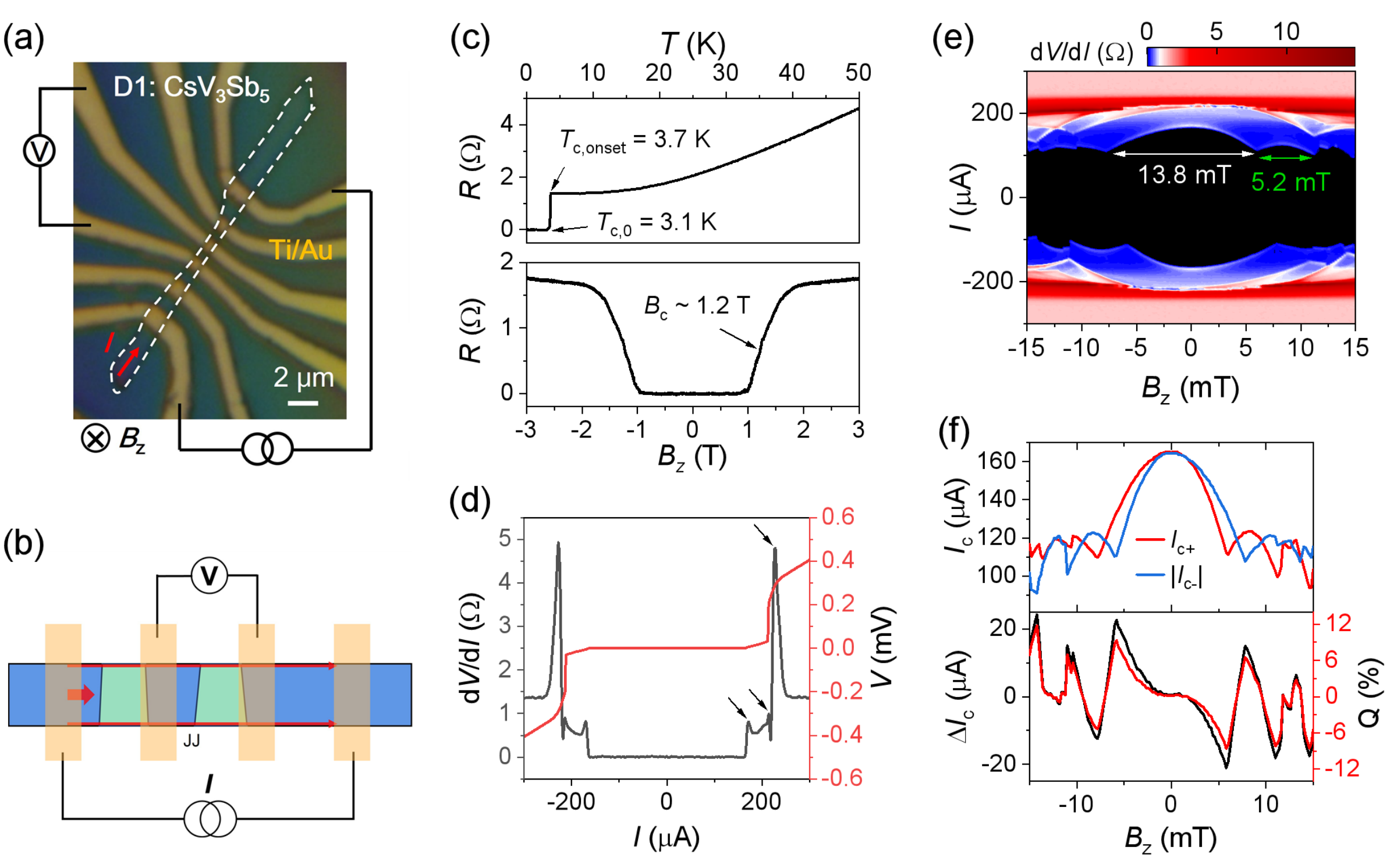
Figure 1: Intrinsic Josephson effect in CsV₃Sb₅ single crystals.
By applying an out-of-plane magnetic field, the team successfully tuned the CPR of the junctions. When microwave irradiation was applied at critical current nodes, the device displayed clear half-integer Shapiro steps — voltage steps with half the conventional height — providing direct evidence of dominant second harmonic contribution. Quantitative analysis revealed that, using magnetic-flux tuning, the ratio of the second harmonic to the first harmonic intensity reached 1.2, far exceeding the theoretical limit of 0.35 for a short ballistic Andreev junction. Such a pronounced enhancement of the second harmonic originates from two factors: first, the highly transparent interface formed by the domain wall supports a non-sinusoidal CPR; second, the non-uniform current distribution in the junction region further amplifies the second harmonic contribution through interference effects. This mechanism is analogous to the strategy of suppressing the first harmonic via magnetic-flux in artificial SQUIDs, but the realization using intrinsic junctions is substantially simplified. This achievement reveals the unique properties of multiband superconductivity in kagome superconductors and holds important application value for constructing protected qubits, parametric amplifiers, and non-reciprocal superconducting devices.
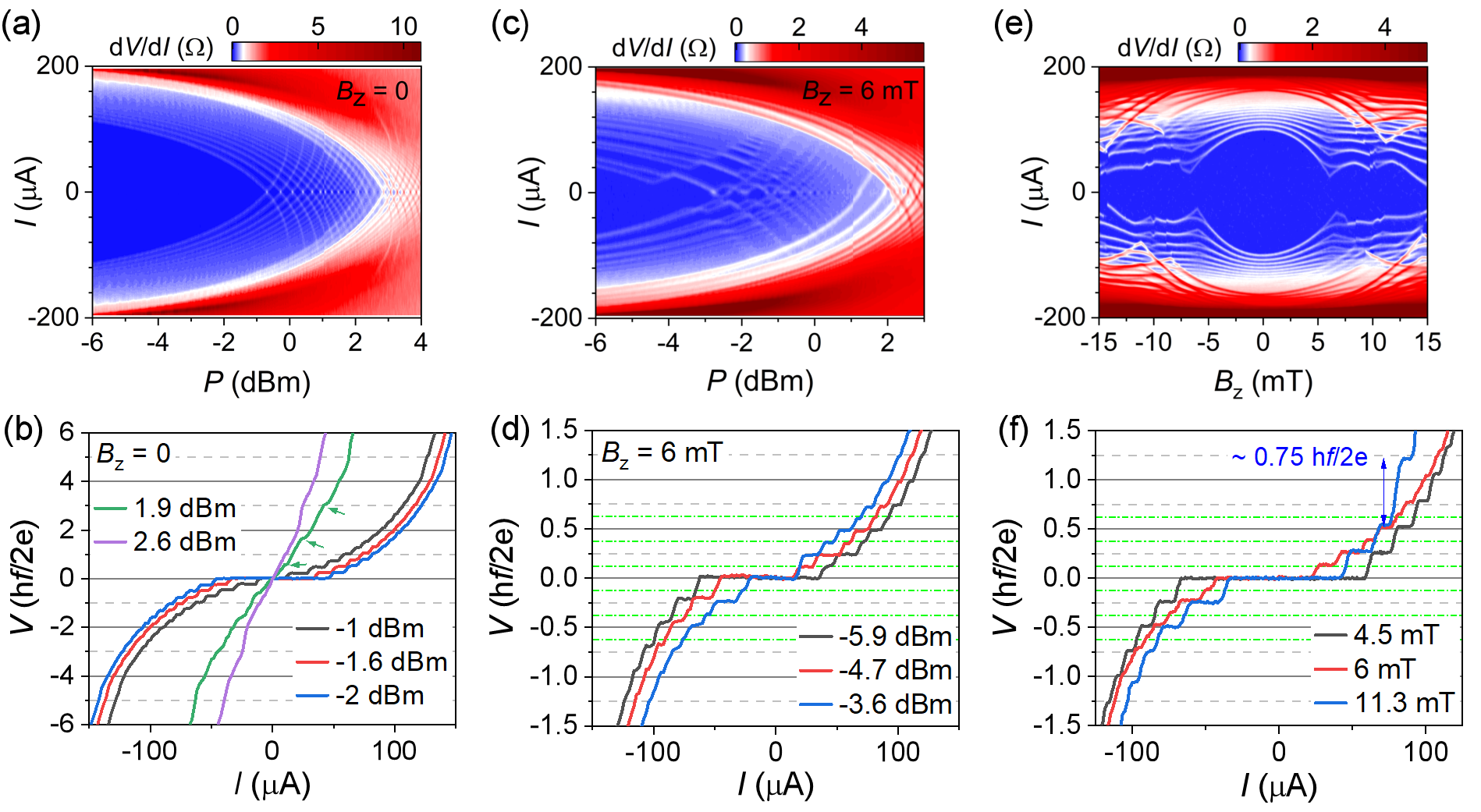
Figure 2: Magnetic-flux tuning of second harmonic content in intrinsic CsV₃Sb₅ Josephson junctions.
Jingjing Chen (Associate Researcher at IQASZ), Hanxin Lou (Ph.D. candidate at Peking University), and Xingguo Ye (Assistant Researcher at IQASZ) are co-first authors of the paper. Jingjing Chen (Associate Researcher at IQASZ), Zhenbing Tan (Associate Researcher at IQASZ), Professor Zhimin Liao from Peking University, and Academician Dapeng Yu at IQASZ are co-corresponding authors. This work was supported by the National Natural Science Foundation of China, Innovation Program for Quantum Science and Technology, Shenzhen Science and Technology Bureau, and Hefei National Laboratory, with technical support from Shenzhen KunTeng Ebeam Technology Co., Ltd.
Paper Link: https://journals.aps.org/prl/abstract/10.1103/34th-gqsy