
中文
中文
Recently, the group led by Xiu-Hao Deng at the Shenzhen International Quantum Academy, in collaboration with researchers from the University of Hong Kong, Fudan University, and other institutions, revealed an intrinsic mechanism by which quantum entanglement enhances the robustness of many-body quantum dynamics.
Through rigorous theoretical analysis and numerical simulations, the researchers showed that when local subsystems associated with errors become sufficiently entangled with the rest of the system, the influence of local coherent errors on quantum evolution can be substantially suppressed. For a class of local error models considered in the work, the error bound can improve from a scaling linear in the number of error terms to a square-root scaling.
The results also suggest a new route toward robust quantum control. By combining existing robust control pulses with the entanglement structure of a multiqubit system, one can reduce operational errors caused by control imperfections such as cross-talk and, under suitable conditions, shorten the gate-operation time.The work, entitled “Entanglement-induced resilience of quantum dynamics,” was published in Science Advances on October 2, 2026 .
High-precision quantum evolution underlies both quantum simulation and quantum computation. In realistic devices, variations in qubit parameters, residual couplings, cross-talk, and distortions of control pulses can cause the actual dynamics to deviate from the intended evolution. As the system size increases, the accumulation of such errors becomes increasingly difficult to control.
Quantum error correction and dynamical decoupling provide powerful means of protecting quantum systems, but they typically require additional resources such as encoding overhead, measurements, or control pulses.
Entanglement is a central resource in quantum information processing, while at the same time it can itself be vulnerable to noise. This work focuses on another role of entanglement in quantum dynamics: Can preexisting or dynamically generated many-body entanglement reduce the sensitivity of continuous-time quantum dynamics to local coherent errors?
This question is directly relevant to the reliability of analog quantum simulation and to the precise implementation of quantum gates in multiqubit environments.
How Entanglement Affects Dynamical Errors
The researchers first established a general error bound for time-dependent Hamiltonian dynamics, relating the state deviation between the ideal and perturbed evolutions to the action of the error Hamiltonian along the ideal dynamical trajectory.
They then applied an existing entropy–expectation-value inequality to this setting, establishing a quantitative connection between the dynamical error bound and the entanglement entropy of the relevant local subsystems.
The physical picture is as follows. When these local subsystems become sufficiently entangled with the rest of the system, their reduced density matrices approach maximally mixed states. As a result, the contributions from different local error terms are less likely to add coherently in the same direction.
Consequently, for a given dynamical trajectory, the error can approach an average-case behavior, which is substantially smaller than the worst-case estimate obtained by optimizing over all possible input states. Mathematically, this corresponds to a transition from a worst-case error bound characterized by the spectral norm to a scale governed predominantly by the normalized Frobenius norm.
For the representative local error models studied in the paper, if the number of error terms is denoted by N, the relevant error scale can improve from order N to order √N (Fig. 1).
This mechanism makes direct use of the entanglement already present in, or naturally generated by, the system and does not by itself require ancillary qubits or error-correction measurements. The degree of protection depends on the entanglement structure in the regions on which the errors act and on how that structure evolves in time.
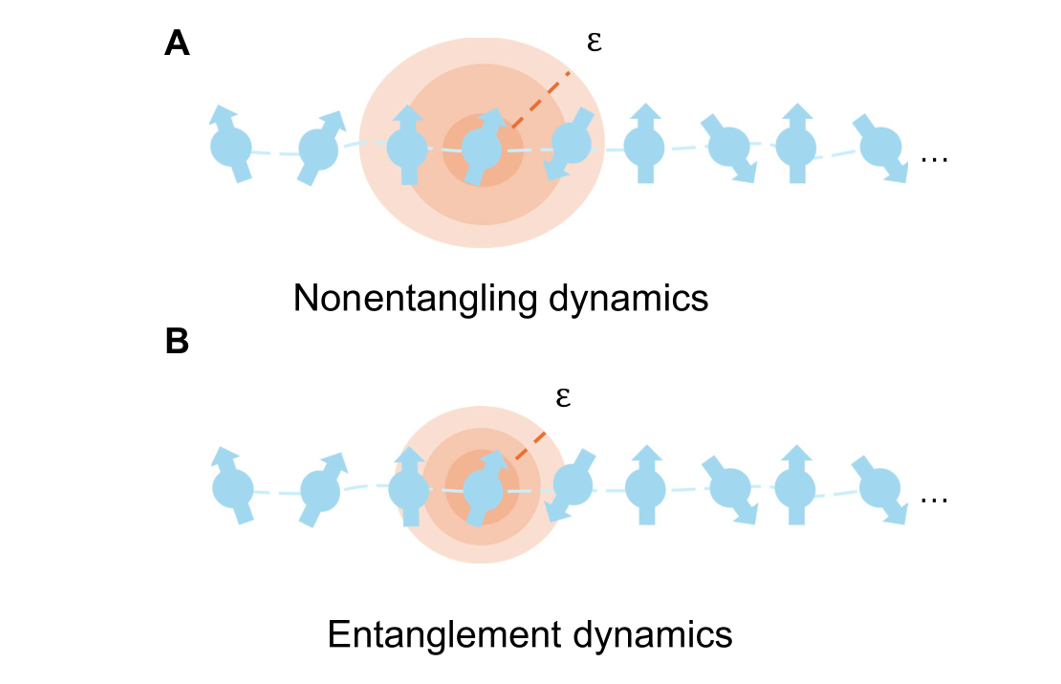
Figure 1. Schematic illustration of entanglement-induced suppression of local errors.
For the local error models considered in the work, errors may accumulate linearly with the number of error terms when entanglement is weak. With sufficient entanglement, the corresponding error scale can be reduced to a square-root dependence. The red shaded regions denote the error envelopes.
Numerical Verification in Many-Body Models
The researchers numerically tested the theoretical predictions in one- and two-dimensional transverse-field Ising models, as well as in the Fermi-Hubbard model describing interacting fermions.
For the transverse-field Ising model in the parameter regime considered, the all-zero product state rapidly develops entanglement during time evolution, and the growth of the simulation error approaches the average-case estimate. By contrast, an x-polarized product state retains relatively low entanglement during the dynamics, and its error remains much closer to the worst-case bound (Fig. 2).
Here, the terms “typical” and “atypical” refer specifically to the initial states in the model and parameter regime considered in the study.
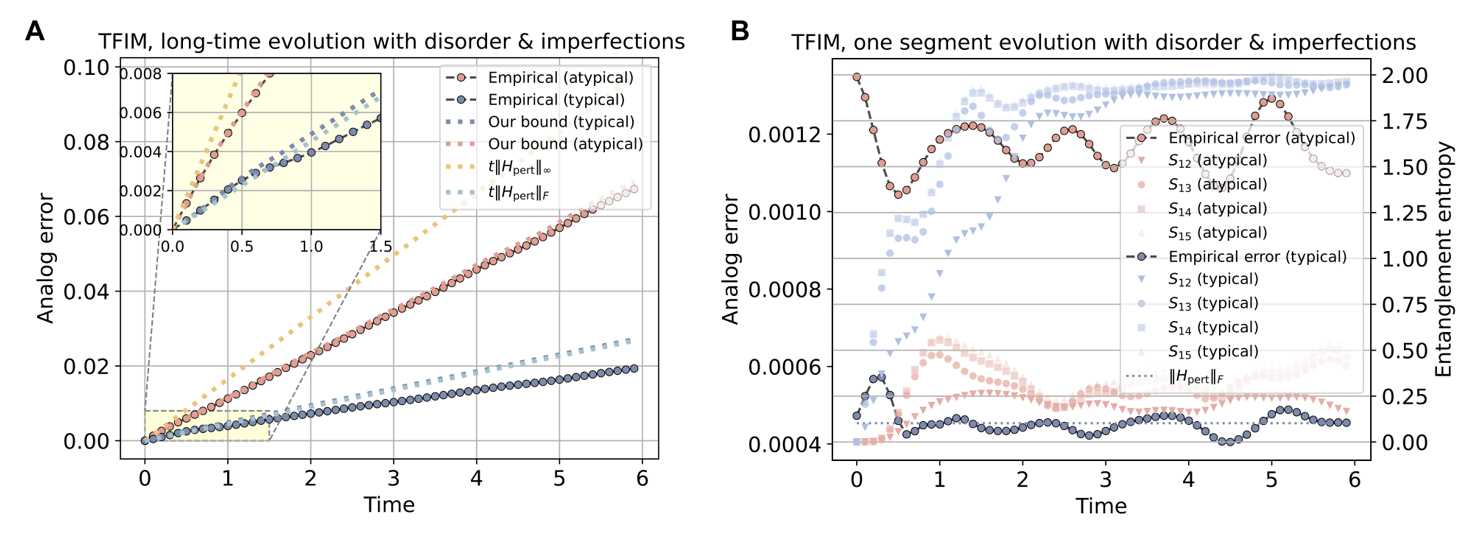
Figure 2. Error and entanglement in the transverse-field Ising model.
Starting from the all-zero product state, entanglement grows during the evolution and the dynamical error approaches the average-case estimate. Starting from an x-polarized product state, entanglement remains relatively low and the error is closer to the worst-case bound.
In the Fermi-Hubbard model, the researchers examined the error accumulated over individual short-time segments along the dynamical trajectory and compared it with the entanglement entropy of the corresponding two-site subsystems.
The numerical results show that when the entanglement entropy increases, the single-segment dynamical error approaches the average-case scale. When the entanglement decreases, sharp increases in the segment error can occur (Fig. 3).
These results further support the connection between entanglement growth and error suppression, while also demonstrating that the degree of protection can vary dynamically during the evolution.
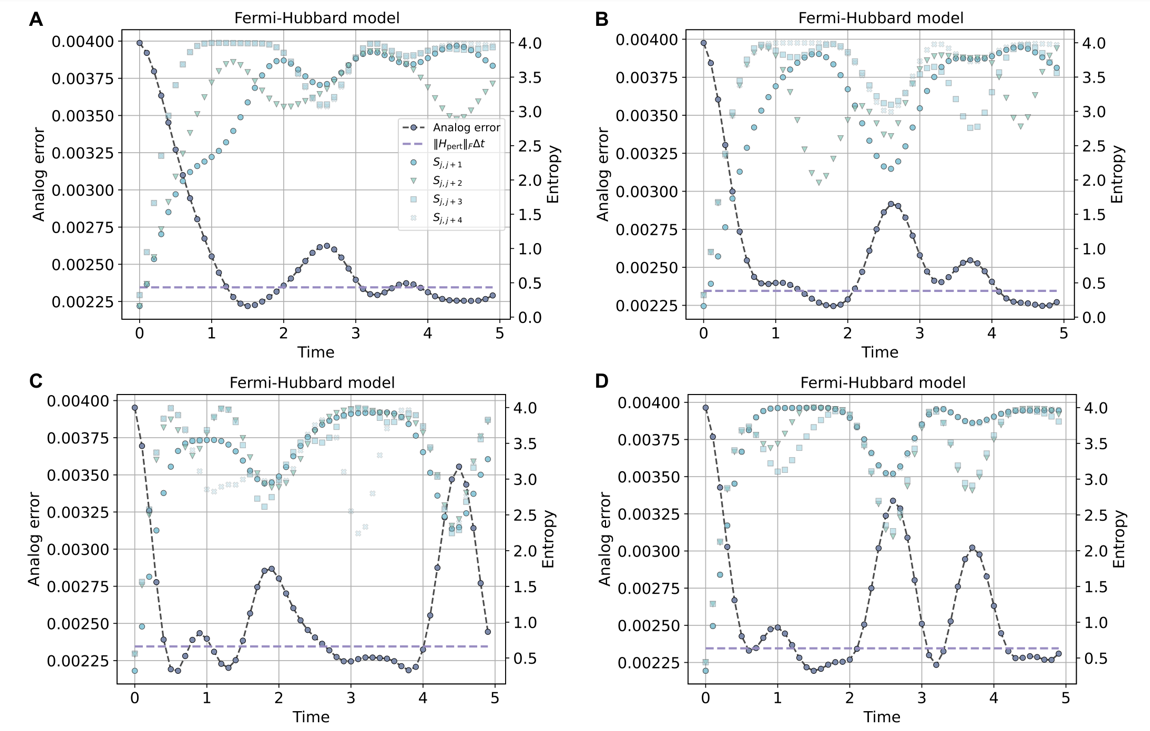
Figure 3. Single-segment errors in the Fermi-Hubbard model.
The errors accumulated over fixed-duration short-time segments are compared with the entanglement entropy of corresponding two-site subsystems along the evolution. The two quantities exhibit an inverse trend, with the error in each segment evaluated from the state at the beginning of that segment.
Local-Correlation Diagnostics for Experiments
To experimentally determine whether the error dynamics are approaching average-case behavior, the researchers further proposed a local-correlation diagnostic based on the structure of the error Hamiltonian.
Given known couplings and possible error terms in a device, measuring cross-correlations between different error operators can provide information about how the errors accumulate, while reducing the need for full many-body state tomography (Fig. 4).
The researchers also showed that a significantly nonzero expectation value of an appropriate local observable can place an upper bound on the entanglement entropy of the corresponding subsystem. Conversely, cross-correlations close to zero are consistent with strong entanglement, although such measurements alone are not sufficient to certify strong entanglement and should be supplemented by additional local observables.
This provides a practical route for testing the proposed mechanism on quantum-simulation and quantum-computing platforms.
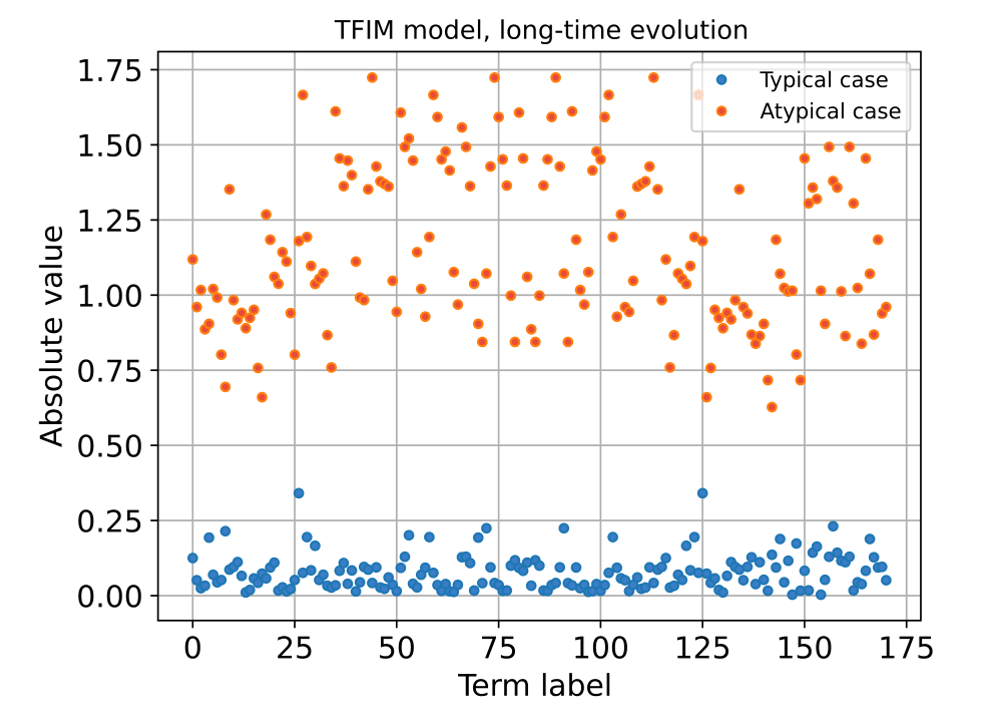
Figure 4. Local cross-correlations and error behavior.
In the transverse-field Ising model studied in the work, many cross-correlations are close to zero after the evolution of a typical initial state, whereas the atypical state retains substantially more nonzero local correlations. Such measurements can be used to diagnose the error behavior, although they do not by themselves constitute a sufficient witness of strong entanglement.
Entanglement-Assisted Error Suppression in Quantum Control
Quantum control constitutes an important application of the theoretical framework developed in this work.
In realistic devices, when a control pulse is applied to a target qubit, residual couplings to neighboring qubits can lead to frequency shifts, configuration-dependent responses to the driving field, and cross-talk. Deng’s group and collaborators incorporated these effects into a unified control-error analysis and investigated how multiqubit entanglement influences the fidelity of quantum-gate implementation.
The researchers treated the target qubit together with neighboring spectator qubits affected by cross-talk as a subsystem A, while the remaining qubits formed subsystem B. They then derived a time-dependent control-error bound that explicitly depends on the degree of entanglement between A and B.
When sufficiently strong entanglement is maintained during the control pulse, the state-dependent gate error can approach an average-case scale characterized by the normalized Frobenius norm. The resulting framework therefore allows the error analysis to incorporate the structure of the quantum state, rather than relying solely on the control pulse and coupling parameters.
As a concrete example, the researchers considered single-qubit rotations in a 3×4 two-dimensional semiconductor quantum-dot array. The target qubit and its four neighboring qubits form a five-qubit subsystem A. Using robust control pulses with a duration of 180 ns, the researchers compared input states with different degrees of entanglement and found that the evaluated state-dependent gate error decreases substantially as the entanglement between A and B increases (Fig. 5).
The Supplementary Materials further provide corresponding analyses and numerical tests for two-qubit gates.
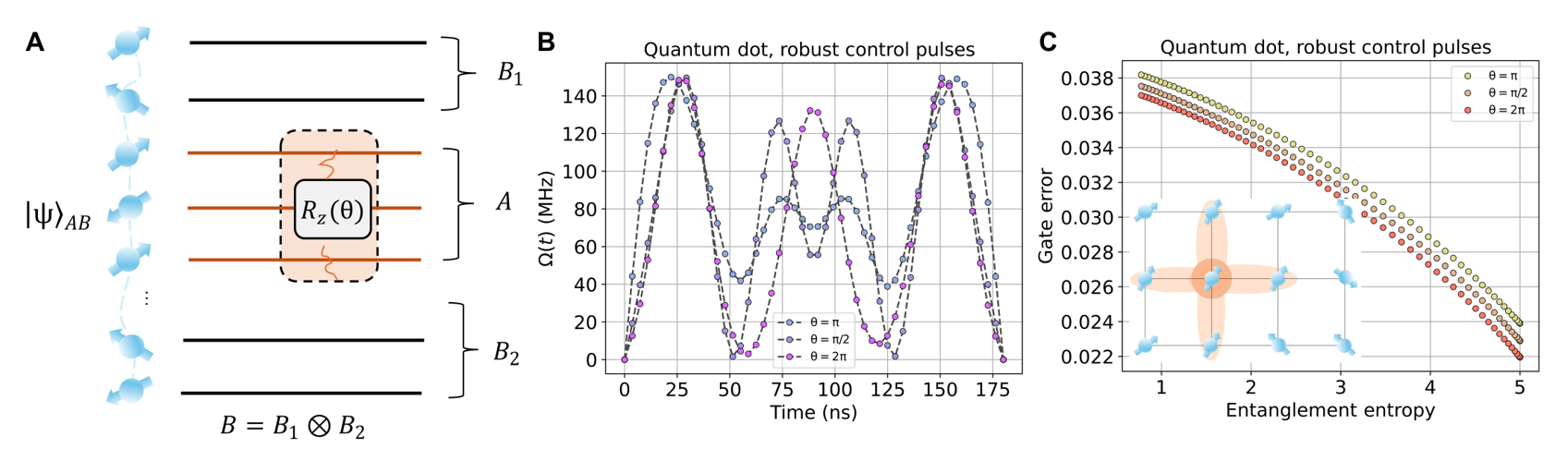
Figure 5. Entanglement-assisted quantum-gate control.
(A) The target qubit and neighboring spectator qubits form subsystem A, while the remaining qubits form subsystem B. (B) Robust control pulses with a duration of 180 ns are used to implement single-qubit rotations. (C) In a 3×4 quantum-dot array, the state-dependent gate error decreases as the entanglement between A and B increases.
Entanglement-assisted error suppression also provides additional tolerance for shortening control pulses. Compressing a pulse in time generally requires a larger driving amplitude and can make the control more susceptible to waveform distortions arising from the finite bandwidth of the control electronics.
In the numerical example presented in the Supplementary Materials, combining the original robust control pulse with entanglement-assisted error suppression makes it possible to maintain a comparable state-dependent control accuracy while reducing the gate time by approximately 25%, from 180 ns to about 135 ns.
This provides a concrete route toward designing faster quantum-control protocols that explicitly exploit information about the entanglement structure of the input state.
Significance
This work quantitatively connects many-body entanglement with the influence of local coherent errors, providing a unified theoretical framework for error analysis in quantum simulation, robust control-pulse design, and experimentally accessible diagnostics.
For quantum control in particular, the results suggest that analyses of cross-talk and parameter variations can go beyond control-waveform and coupling parameters alone and incorporate the entanglement structure of the relevant subsystems. This may enable control strategies that better balance operation speed and accuracy.
The mechanism studied here primarily concerns local coherent and perturbative errors. Its effectiveness depends on the specific error model, the entanglement structure, and the strength of dissipative processes. Contributions from Markovian decoherence are treated separately in the theoretical analysis.
When preexisting or naturally generated entanglement is used, the protection mechanism itself does not introduce the encoding or syndrome-measurement overhead associated with quantum error correction. However, when specially engineered entangled input states are required, the corresponding state-preparation cost must still be assessed for the specific implementation.
The authors of the paper are Tianfeng Feng, Yue Cao, Wenjun Yu, Junkai Zeng, Xiaopeng Li, Xiu-Hao Deng, and Qi Zhao. The corresponding authors are Xiaopeng Li of Fudan University, Xiu-Hao Deng of the Shenzhen International Quantum Academy, and Qi Zhao of the University of Hong Kong. The work was supported by the Innovation Program for Quantum Science and Technology, the National Natural Science Foundation of China, the Guangdong Basic and Applied Basic Research Foundation, the Hong Kong Research Grants Council, the Shenzhen Science and Technology Program, and other related funding programs.
Paper Link: https://www.science.org/doi/10.1126/sciadv.aef3416
The full paper is available through the link above.
This research highlight was prepared based on the published paper and its Supplementary Materials for academic communication purposes.