
中文
中文
From August 30 to September 2, coinciding with the United Nations International Year of Quantum Science and Technology and the 5th anniversary of the establishment of Hefei National Laboratory, the 4th Phoenix Summit Forum on Quantum Information Physics was successfully held in Yinchuan, Ningxia. With the theme of "Silicon-based Quantum Computing", this forum was co-hosted by Shenzhen International Quantum Academy and Ningxia University, organized by the School of Physics of Ningxia University, and co-organized by the Ningxia Physical Society and the Shenzhen Quantum Information Society.

More than 100 experts and scholars from the top research teams of 30 institutions, including Peking University, Tsinghua University, University of Science and Technology of China, University of Pittsburgh (USA), Zhejiang University, Nanjing University, University of Electronic Science and Technology of China, Southern University of Science and Technology, University of Macau, Westlake University, Xidian University, Guangdong University of Technology, Ningxia University, Hefei National Laboratory, Shenzhen International Quantum Academy, Institute of Semiconductors of the Chinese Academy of Sciences, Beijing Academy of Quantum Information Sciences, Research Institute of Chemical and Physical Engineering of China National Nuclear Industry, Beijing Superstring Memory Research Institute, and Songshan Lake Materials Laboratory, gathered in Yinchuan, Ningxia to attend this Phoenix Forum. They conducted in-depth exchanges and discussions on the key technical issues in the field of silicon-based quantum computing.
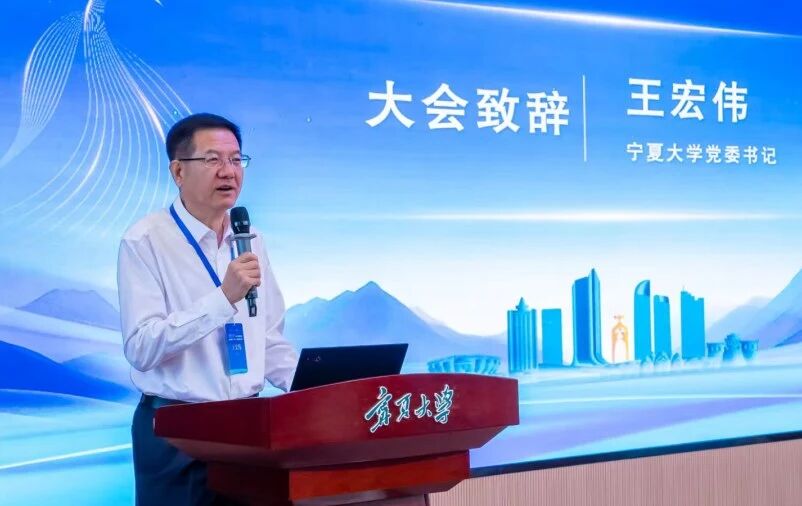
The opening ceremony of the forum was held on the morning of August 31 at Huaiyuan Campus of Ningxia University, hosted by Wang Xuming, Dean of the School of Physics of Ningxia University. Wang Hongwei, Secretary of the Party Committee of Ningxia University, delivered a welcome speech on behalf of the university. He extended a warm welcome to the guests attending the forum from afar and expressed sincere gratitude to friends from all walks of life who have long cared about and supported the construction and development of Ningxia University.
Academician Yu Dapeng, Member of the Chinese Academy of Sciences and President of Shenzhen International Quantum Academy, gave a detailed introduction to the core topics and focus directions of this forum to the guests present. Academician Yu Dapeng stated that quantum computing is a century-spanning project that can reflect the ultimate ability of human beings to manipulate the micro-world. This forum brings together the core domestic teams in the field of silicon-based quantum computing in Yinchuan, the "Phoenix City". He hoped that all participants could take this opportunity to conduct full exchanges, pool ideas, carry out collaborative innovation, and jointly tackle the difficult problems of quantum computing, a century-spanning systematic project. At the same time, he also hoped to contribute to the development of central and western regions of China and the construction of physics discipline.
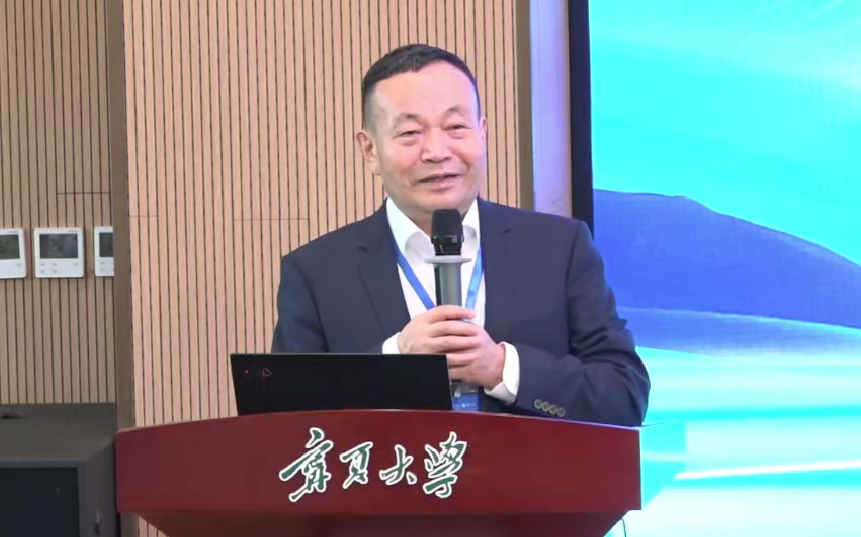
Wang Xuming, Dean of the School of Physics of Ningxia University, focused on introducing the basic situation of the school and its construction achievements in recent years, and extended a warm welcome to the attending experts and scholars. He pointed out that the School of Physics of Ningxia University being able to host such a high-standard academic conference is a recognition of the school's scientific research strength and discipline construction. He also hoped that through this forum, the school could further deepen cooperation with various scientific research institutions and promote the development of physics and related disciplines of Ningxia University.
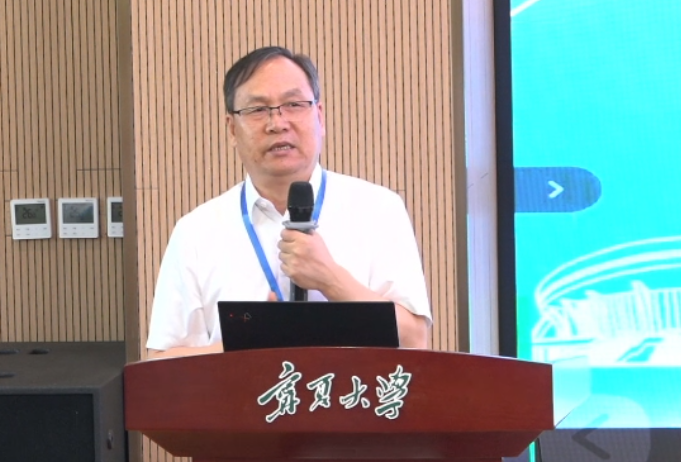
A total of 25 presentations were delivered at this forum, covering the development of silicon-based materials, algorithms and systems of silicon-based quantum computing, chip processing, etc. These presentations effectively promoted interdisciplinary integration and in-depth discussions in the field of silicon-based quantum computing.
Researcher Xue Xiao from Shenzhen International Quantum Academy delivered a review report titled "Silicon-based Quantum Computing: History and Outlook", which systematically introduced the development history, latest progress and future prospects of the silicon-based quantum computing system.
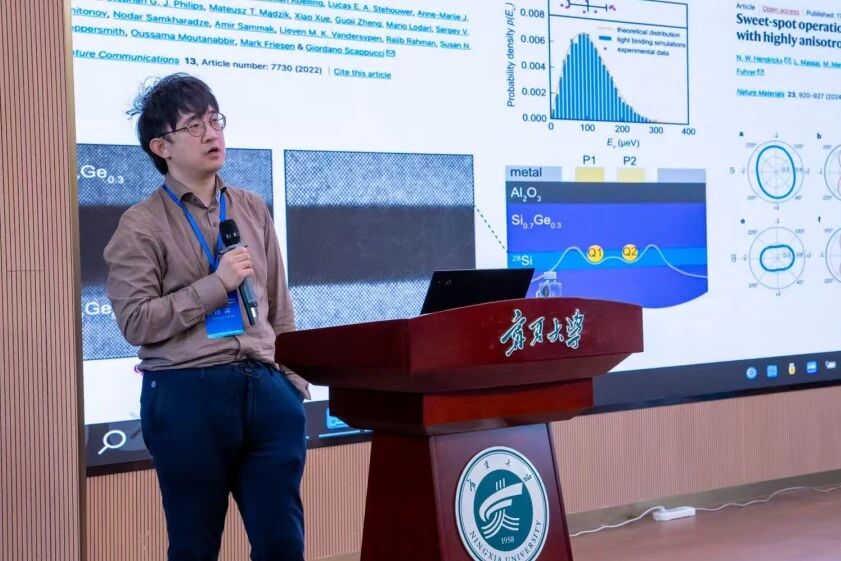
Researcher Luo Junwei from the Institute of Semiconductors of the Chinese Academy of Sciences delivered a report titled "Theoretical Design of SiGe Quantum Dot Materials for Quantum Bits". He systematically introduced the challenges of SiGe quantum dot materials faced by silicon-based quantum computing and proposed a series of theoretical solutions through reverse design at the atomic scale.
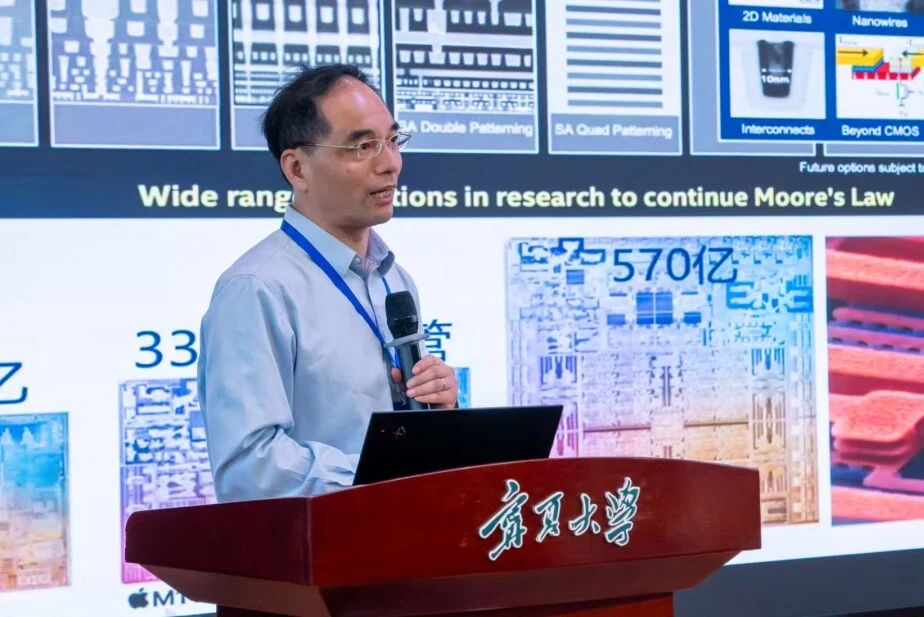
Researcher Yu Linwei from Hangzhou International Science and Technology Innovation Center of Zhejiang University, Researcher Wang Guilei from Beijing Superstring Memory Research Institute, Researcher Zhang Jieyin from Songshan Lake Materials Laboratory, Researcher Lu Jun from the Institute of Semiconductors of the Chinese Academy of Sciences, and the research team led by Researcher Xie Quanxin from Research Institute of Chemical and Physical Engineering of China National Nuclear Industry shared their latest research results respectively in terms of the preparation of high-abundance silicon-28 isotope materials for quantum information, molecular beam epitaxy growth of silicon-based SiGe materials, and device applications of silicon-based materials.
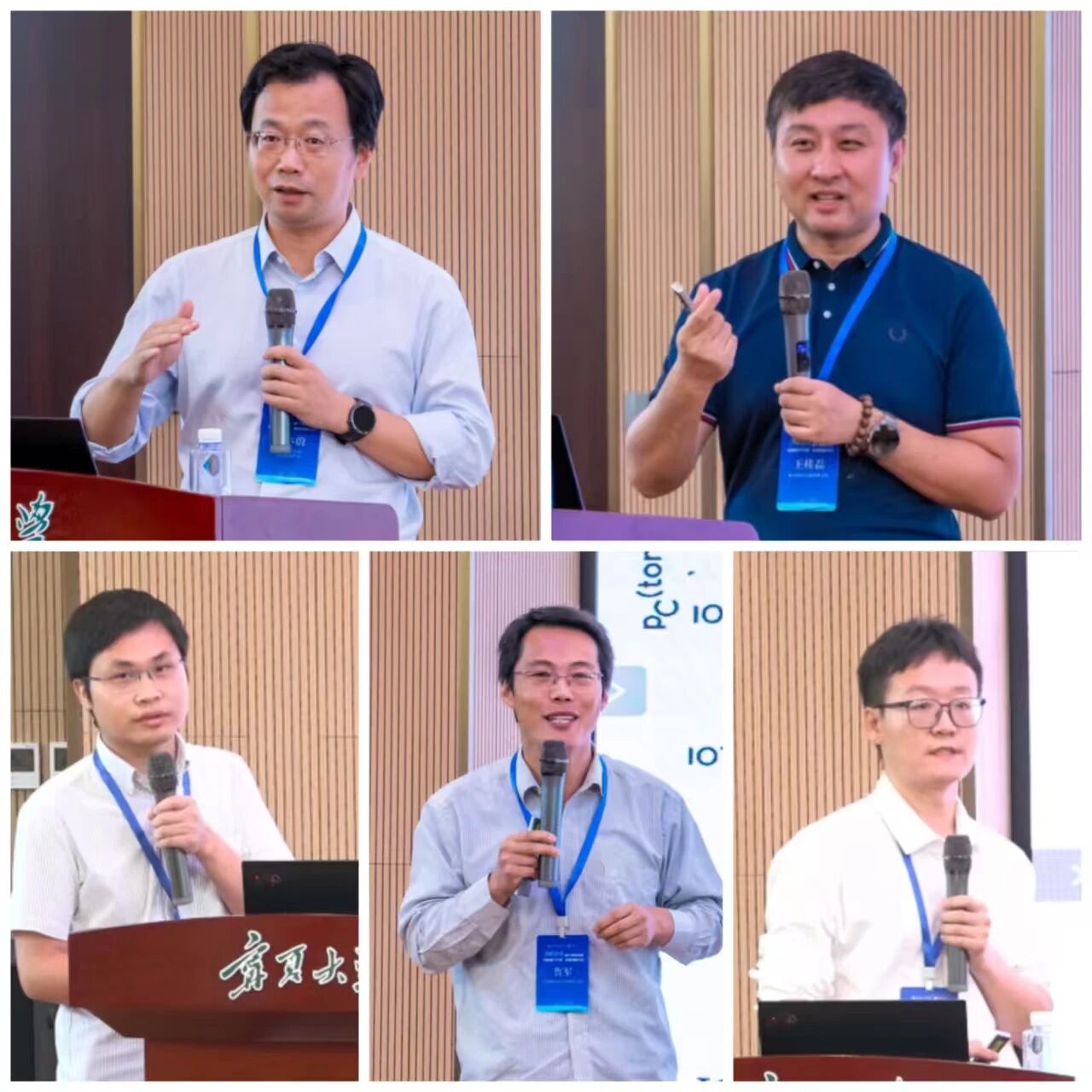
Researcher He Yu from Shenzhen International Quantum Academy delivered a report titled "Donor Spin Qubits in Silicon", which systematically introduced a series of atomic fabrication technologies for silicon-based single-atom quantum computing chips, the latest research based on these technologies, and the ideas and explorations for large-scale integrated quantum computing.
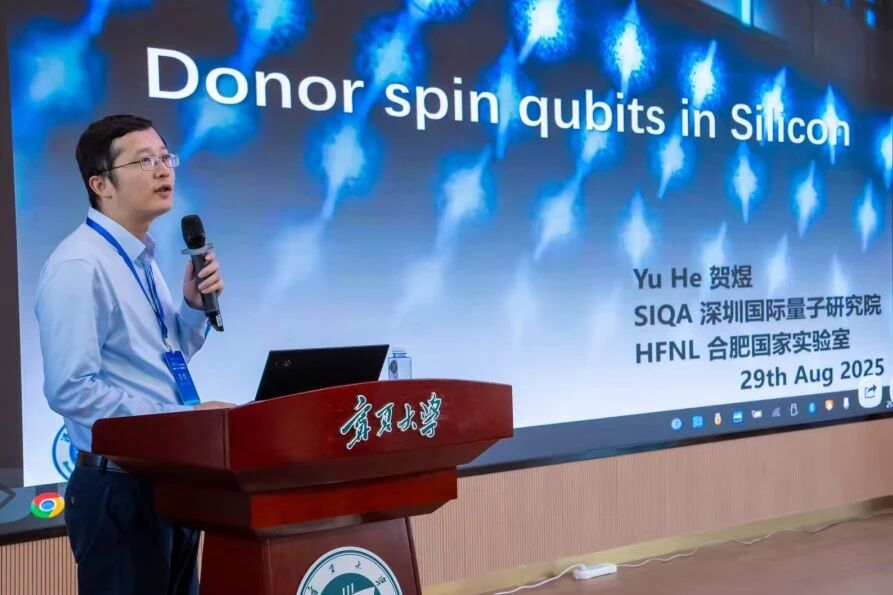
Professor Liu Dong from the Department of Physics of Tsinghua University, Researchers Pei Tian, Wang Jiyin and Liu Xiaofei from Beijing Academy of Quantum Information Sciences, and Professor Cai Xinxin from the Department of Physics of Southern University of Science and Technology delivered presentations focusing on topics such as noise problems in quantum computing, semiconductor quantum devices based on germanium holes, spin-valley coherent control and nuclear spin dark state research in silicon-based quantum dots, and conducted in-depth discussions on the paths to achieve fault-tolerant quantum computing.
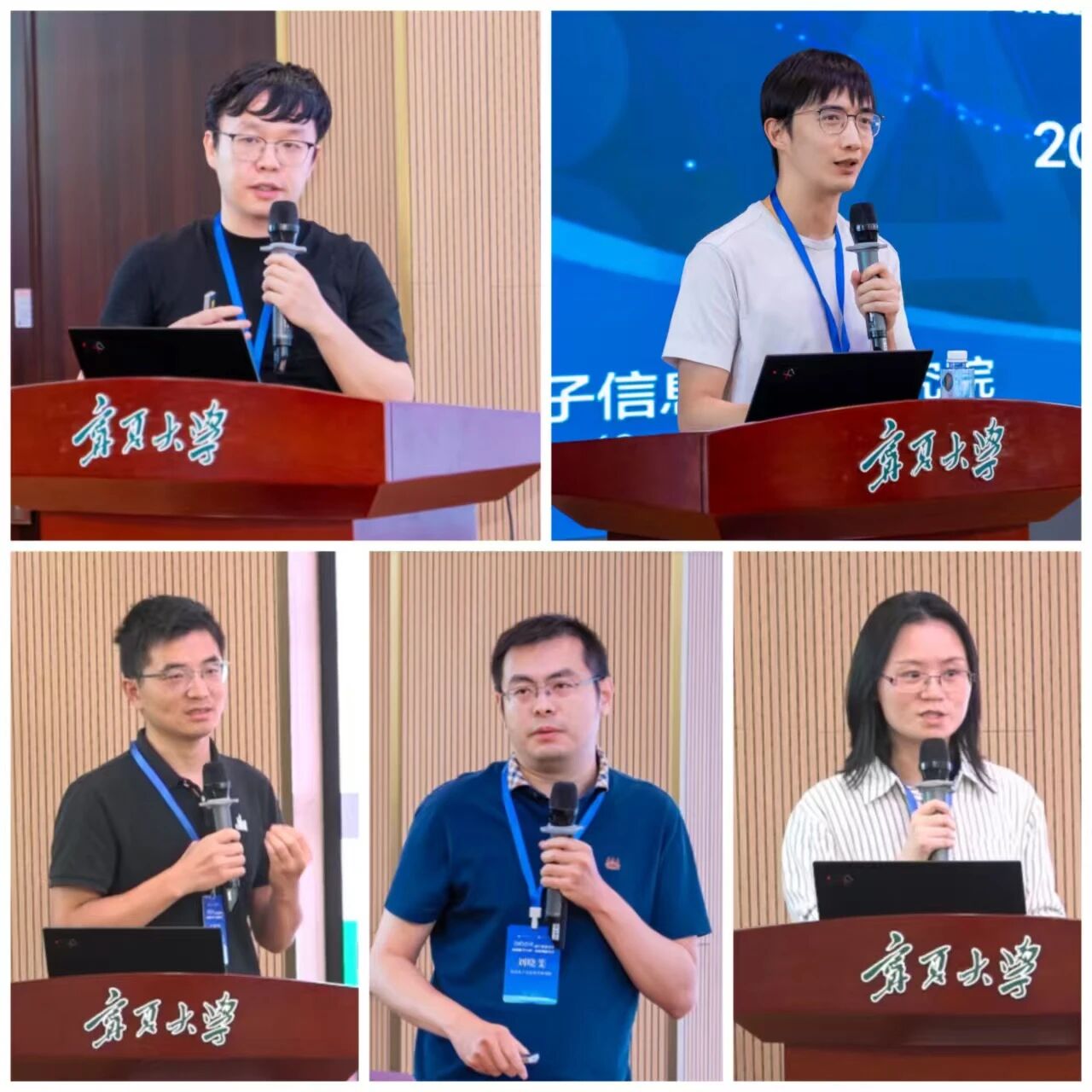
The research team led by Professor Liu Maliang from Xidian University, Professor Wang Cheng from University of Electronic Science and Technology of China, and Professor Peng Yatao from University of Macau delivered reports respectively from the perspectives of research on key chips and technologies for cryogenic quantum measurement and control systems, cryogenic integrated circuits for large-scale qubit measurement & control and quantum error correction, and design of ultra-low temperature BiCMOS low-noise amplifiers applied to single-photon nanodetector readout, discussing solutions to the problems of scalability and fidelity in silicon-based quantum computing.
Professor Li Xinhao from Westlake University, Professor Chen Yi from Peking University, Researcher Wan Yong from Hefei National Laboratory, and Researcher Sun Haoran from University of Science and Technology of China delivered presentations focusing on topics such as solid neon surface electron qubits, atomic-scale characterization and manipulation platforms for solid-state qubit research and development, and interacting p-orbital fermions on hexagonal lattices respectively.

Meanwhile, this conference received strong support from Chengdu Zhongwei Daxin Technology Co., Ltd., Hefei Zhileng Cryogenic Technology Co., Ltd., Shanghai Quantum Origin Technology Co., Ltd., CSSC Pengli (Nanjing) Cryogenic Technology Co., Ltd., and Scienta Omicron. The gold sponsors of the conference delivered presentations in turn.
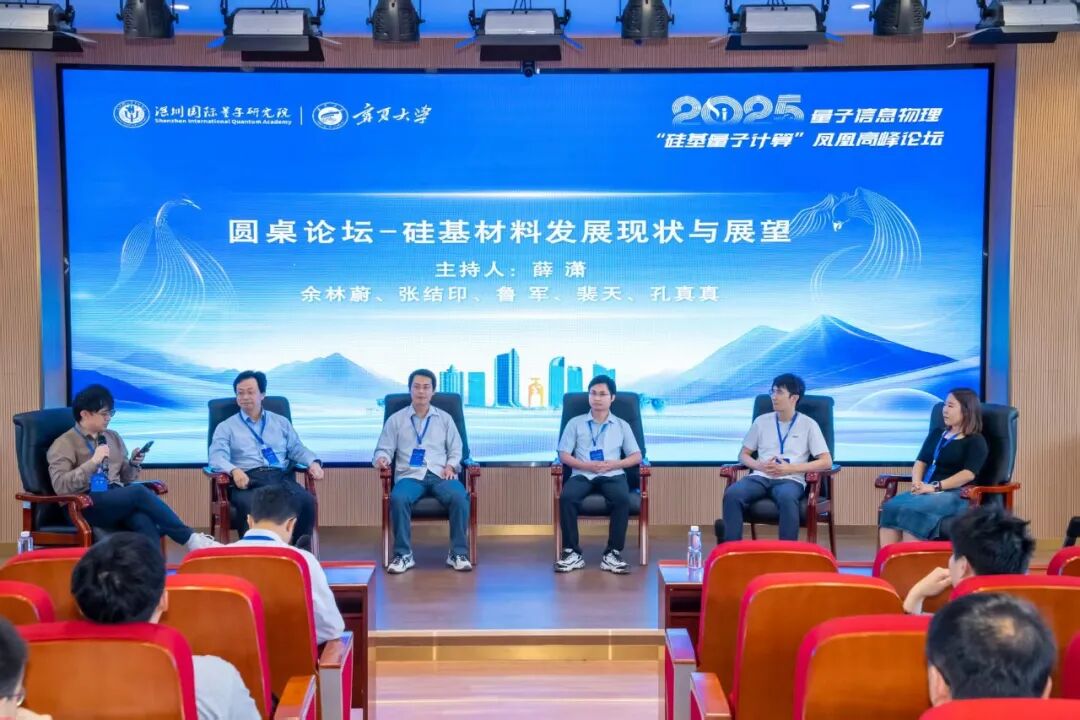
During the conference, two lively roundtable forums were held with numerous insightful remarks. The first roundtable forum was hosted by Researcher Xue Xiao. Researchers Yu Linwei, Zhang Jieyin, Pei Tian, Lu Jun and Kong Zhenzhen conducted discussions on the current development status and future prospects of silicon-based materials. The guests unanimously agreed that the development of silicon-based materials is crucial to the development of quantum computing. It is necessary to continuously strengthen cooperation between academia and industry to jointly overcome key challenges such as material purity, interface control and equipment processes.
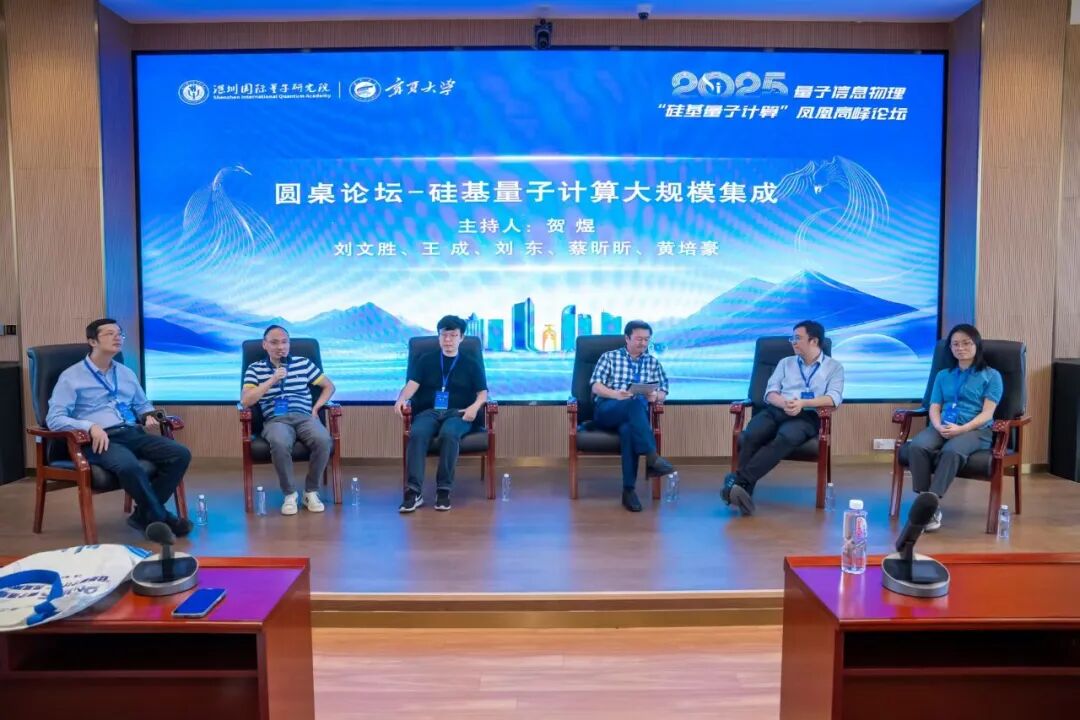
The second roundtable forum was hosted by Researcher He Yu. Researchers Liu Wensheng, Wang Cheng, Liu Dong, Cai Xinxin and Huang Peihao conducted exchanges and discussions focusing on the large-scale integration of silicon-based quantum computing, sharing their own views and thoughts. Silicon-based quantum computing has significant advantages in process compatibility, but it still faces various challenges. It is necessary for academia to first verify technical feasibility and promote the collaborative participation of industry to achieve two-way cooperation and jointly break through the threshold of fault-tolerant quantum computing.
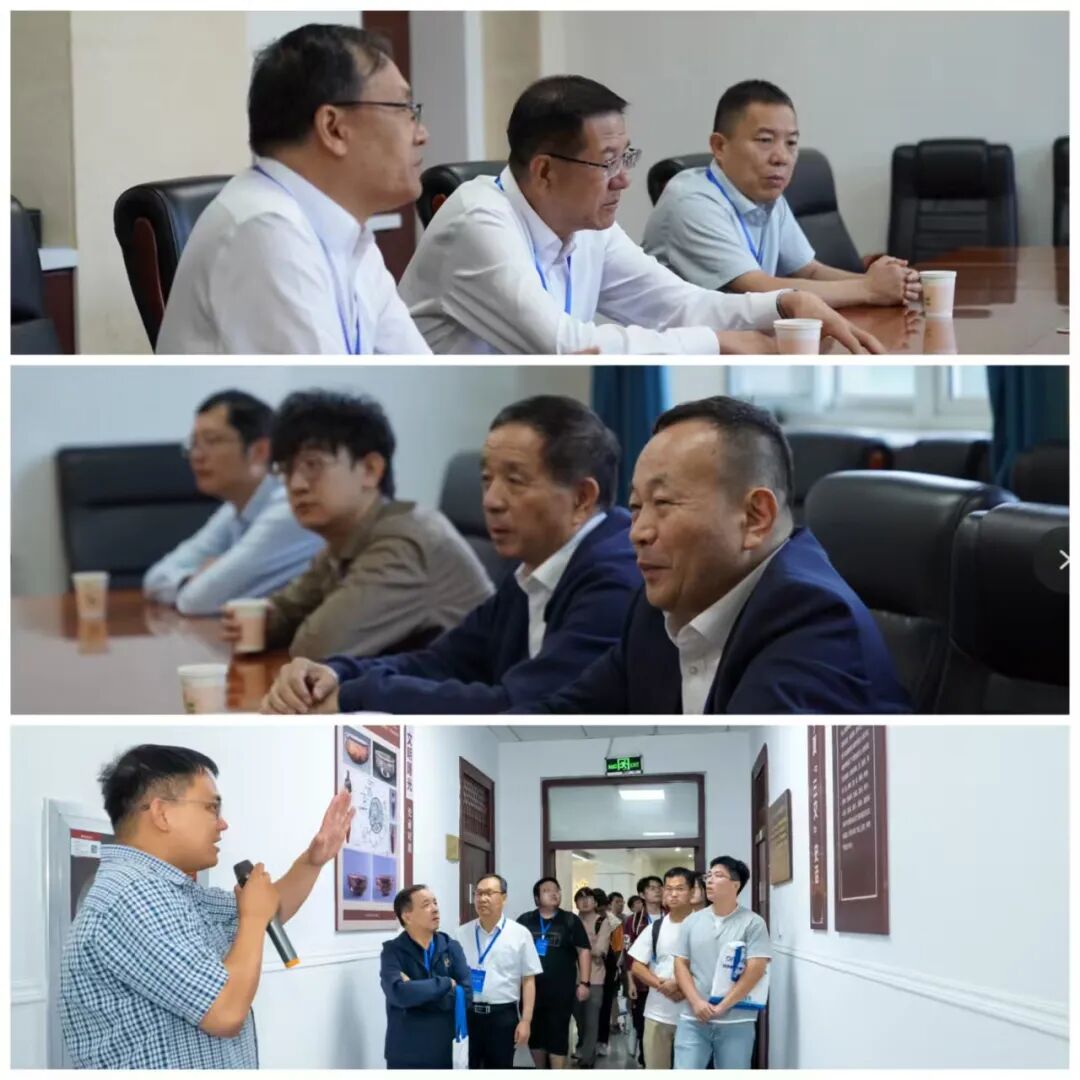
During the conference, relevant leaders from Shenzhen International Quantum Academy and Ningxia University conducted in-depth exchanges and discussions on strengthening talent training and discipline construction. Ningxia University also specially organized a visit and exchange activity, where the attending guests visited exhibition halls such as the Education Base for the Chinese Nation Community of Ningxia University.
The heart-to-heart connection between the Hetao areas, resonating in unison from south to north. Ningxia, located at the geometric center of China's land territory, stretches across the Hetao area of the Yellow River, and its capital Yinchuan is also known as the "Phoenix City". Shenzhen International Quantum Academy, as the southern pillar of China's core strategic force in quantum science and technology, is located in the Shenzhen Park of the Shenzhen-Hong Kong Hetao Science and Technology Innovation Cooperation Zone, which is also the Hetao area along the Shenzhen River, the boundary river between Shenzhen, the "Pengcheng City", and Hong Kong. Although the two "Hetao areas" are located in different regions and far apart, they have unlimited potential for cooperation on the journey of technological innovation.
This forum focused on in-depth discussions on the current technical bottlenecks in the field of silicon-based quantum computing, effectively promoting the innovative development of China's silicon-based quantum computing field. It enabled the peaceful "Phoenix" and the forging-ahead "ROC (Roc is implied by Academician Yu Dapeng's name and the spirit of the academy)" to cross the spatial boundaries and soar together in the vast sky of technological innovation.